October Reasons 🧡

By Gail Moore Woltkamp

I had never heard of singer-songwriter Nanci Griffith until I met my future husband in 1990. Among so many fun things he introduced me to, Griffith’s music became something that uniquely captured the early parts of our relationship amidst a folksy blues backdrop.

After both our busy work days, I would walk into Bill’s Kansas City apartment and hear his stereo playing in the background. His music opened up a whole new world for me and like any new relationship, I was in all kinds of Heaven. 

Back then, of course, it was compact discs and his were stacked in an antique rolltop desk acquired from a family member. It sat near his picture window, that I loved, in his living room area where he had re-painted the walls a warmer color than the typical standard stark white that apartments back then imposed on you. 

He also had a much more envious collection of music than I did…Tom Petty and the Heartbreakers, Bruce Springsteen, Roger Waters, David Gilmore, Patti Smith, Lou Reed, Graham Parker and Neil Young…along with musicians totally unknown to me like Richard Thompson and Iris Dement.

But none of these artists compared to the classy sound of Nanci Griffith’s acoustic guitar and gentle voice on an autumn Saturday afternoon.

One of her signature songs, “Love at the Five and Dime,” conjures sweet Woolworth’s memories of popcorn smells, ten cent treasures, lunch counter romance and the doorbell sound of an elevator opening. How can you beat that?

But what really spoke to me was “More Than a Whisper,” from her album, “The Last of the True Believers,” featuring her Blue Moon Orchestra:

🎶 “It’s snowin’ up in the Northlands…I read your warm words from the plains…while the poets say that I should never be thinkin’ of you this way.” 🎶

When Bill and I met, we lived on opposite sides of Kansas City’s Metropolitan Area. The Northland in KC was less than thirty miles from where I lived on the Kansas side, but some would call it a world away, and one that I took to immediately. 

More snow when we got it, a tad cooler in the winter, lots of pretty, open landscape—His world just felt North to me and Griffith’s swooning lyrics made it all perfect. 

Nanci Griffith
The Last of the True Believers
Fourth Studio Album 1986

Fun when we would see Griffith perform in Kansas City, we might run into certain friends who had discovered her as well. Twenty-somethings in the 90s, we were college-raised on U2, R.E.M., Depeche Mode, The Cure, but our tastes could easily travel the musical genres and Griffith was a big part of that.

In 1993, we saw her perform at the Historic Memorial Hall in Kansas City, Kansas. This tour included other musicians joining her on stage and on our night it was John Prine. 

Our first dance at our wedding in autumn 1994 was to “I Knew Love,” from her album “Little Love Affairs,” and throughout our nearly thirty year marriage, her music has followed right along with us.

As time passed and our boys became teens, I would glance at her website and notice for years it was stuck on the album “Intersection” with no tour dates on the horizon, at least not in the United States.

She had an impressive following in Ireland, which seemed to be a special place for her as she often captured it in her songwriting:

🎶 I would bring you Ireland…the cool sweet of the Dublin rain. If you would keep my heart for me in the quiet of your Texas days. 🎶

Deeply talented and in such a unique way, but as a fan I had wondered if she was also deeply troubled.

Though extremely private, it was known there were health issues and speculation about her personal life pointed to themes in her songs…nostalgic for the past, long-lost friendships, missing that one special true love that timing never quite found. 

Occasionally on the radio, I would hear the Suzy Bogguss version of “Outbound Plane” that Griffith wrote with singer/songwriter Tom Russell. And of course there was Julie Gold’s amazing Grammy winning song, “From A Distance.” Sorry Bette. Nanci’s rendition brings me more clarity.

The thing about her was she wrote or co-wrote most of her songs with themes as varied as post-war romances, Oklahoma winds, drunken bar rooms and Airforce Flyers.

She was a darling of the Texas Folk Music Scene, producing an abundance of songs with her poetic style and stories from the broken heart.

But despite her various nominations and one Grammy win for 1993’s album “Other Voices, Other Rooms,” she just didn’t seem to get the proper credit she deserved. 

Nanci passed away on August 13, 2021 at age 68. It was reported she requested before she died that her management wait one week before sending out any kind of formal communication. Natural causes has been the only reason given to date.

Autumn brings so many positive vibes for me and Nanci Griffith’s songs will always grace the season with their charm. 

Time will be good to you, Nanci, and so will your fans. Someone with your unique voice comes around “Just Once In A Very Blue Moon” and all those who loved you will “feel one comin’ on soon.”🌕

Other Voices Other Rooms
Grammy Win for Best Contemporary Folk Album 1994

#nancigriffith #singersongwriter #autumndays #woolworths #fiveanddime #1940s #1990s #poetinmywindow #littleloveaffairs #octoberreasons #lastofthetruebelievers
A Toast to Miss Mississippi 🍸❤️ 🩰

By Gail Moore Woltkamp

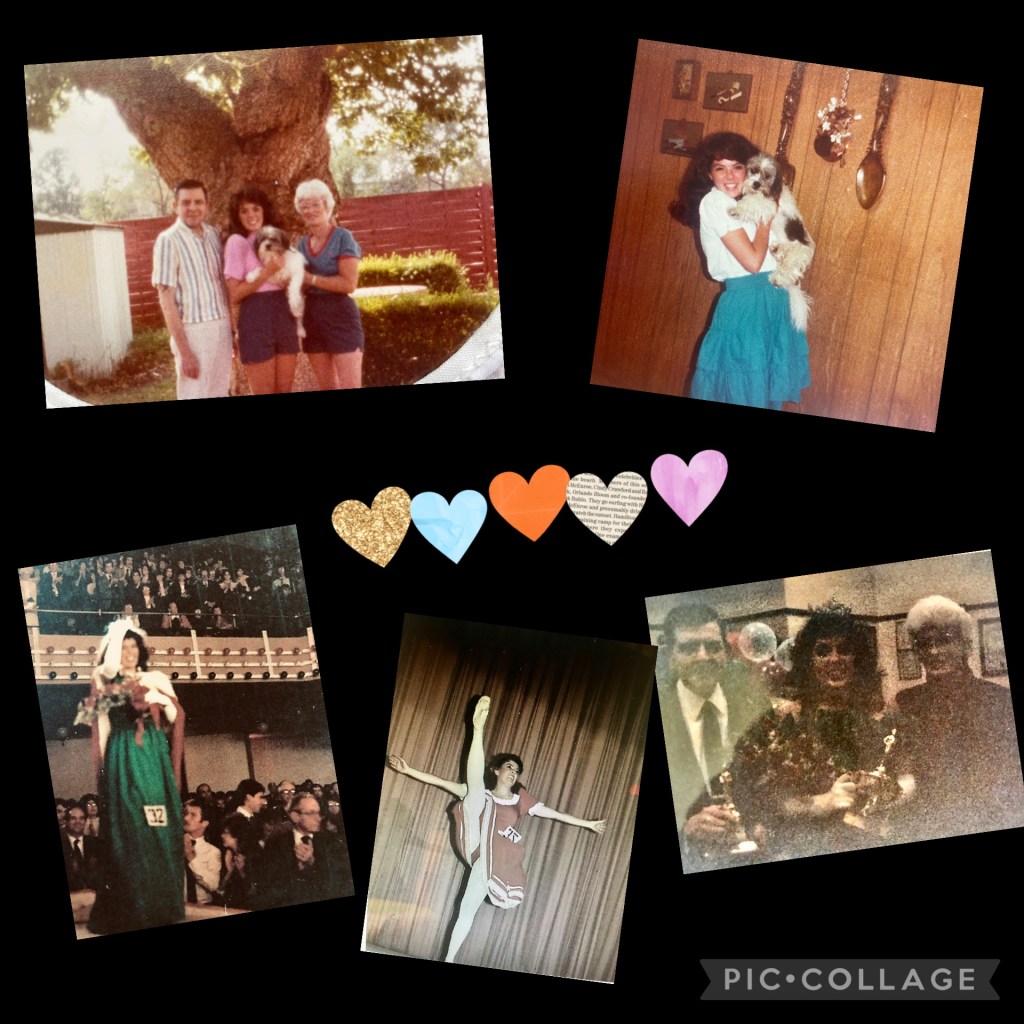
During the summer of 1983, leading up to my senior year in high school, I walked into my hometown’s dance studio to discuss music options with my dance instructor in preparation for a local pageant. Although I was never a Miss America contestant, I was delighted to have the opportunity to compete in a small-town Kansas pageant for the title of Queen Neelah. 

Queen Neelah reigns over a now-nine-day festival with roots dating back to 1919. Uniquely named Neewollah, (Halloween spelled backwards), it was initially organized as a one-day event to provide a positive alternative to “prankster” mischief on Halloween night. It has since grown into a time-honored, hometown tradition, the Largest Annual Celebration in Kansas. 

Neewollah is filled with tons of events drawing over 75,000 visitors annually to the nine-thousand-person-small town of Independence, Kansas. In short, and for purposes of this particular blog post, the festival has an annual Queen Pageant open to local high school senior girls, and the celebration itself is a story for another day. 😉

Having taken dance since I was five years old, I knew I would perform a ballet number for my talent. A big fan of West Side Story, I decided in advance that a selection from its Broadway Soundtrack would be a good fit. My instructor, Sue Straw, a gifted performer and choreographer and someone we all adored, pulled out the album, like magic. 

During the course of listening to part of “Dance at the Gym,” (which I was determined to use), we decided it was just not going to work for a solo performance and it was on to Plan B—except, of course, I didn’t have one. 

In the back of my mind, however, I had a memory of a performance that kept playing in my head. Two years prior, in 1981, I saw a Miss America contestant perform a character ballet, en pointe, to the music from the Broadway Musical, “Annie.” 

Now if you’ve come this far, keep in mind, “Annie” was fairly new. The script, based on the 1924 comic strip, “Little Orphan Annie,” was not adapted into a Broadway musical until 1977, being only six years old by 1983 and just wrapping up its original stint on Broadway. 

Needless to say, the Miss America contestant’s performance stuck with me. Instead of a single song, it was a medley that allowed transitioning into more than one dance style. The contestant merely channeled the character Annie, and did not look exactly like her, leaving alone her flowing blonde locks in lieu of sporting a curly wig.

Clearly trained in ballet, she gave a perfect performance during the live television broadcast and it impressed me enough to tell the story to Miss Straw who again, like magic, pulled out the album. A three-minute listen to the Overture and I was on my way to creating my own version and clinching the title of Queen Neelah. 

I so enjoyed my classmates and friends as we participated together through the pageant events and various functions leading up to the Talent and Coronation Nights. Unique for a small town in Kansas to have this kind of pageant opportunity, it was a highlight of my senior year in high school and one I have always cherished.

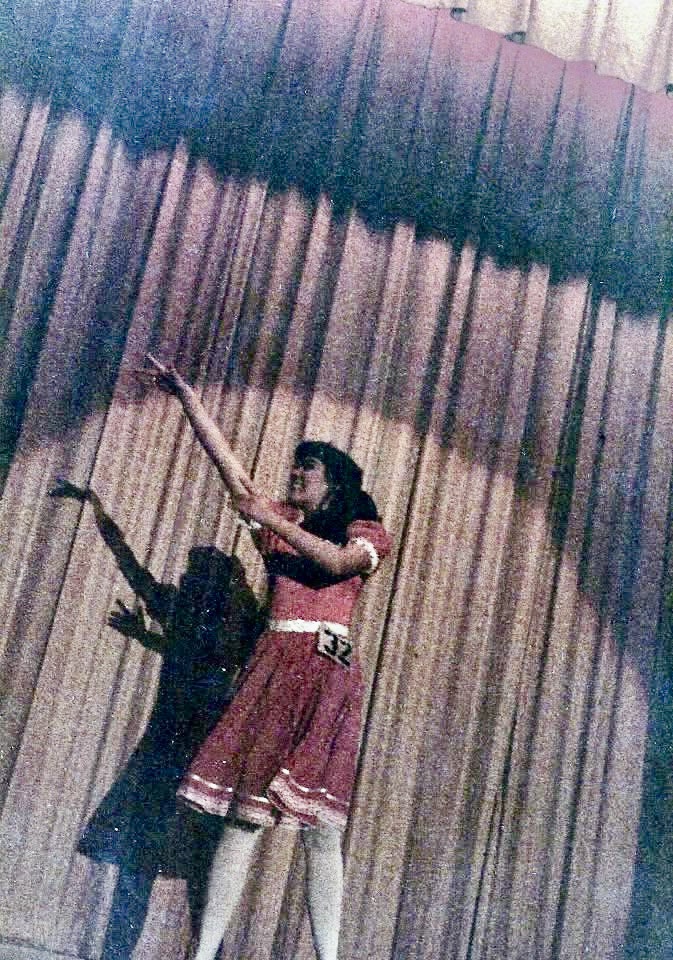
My own Character Ballet to “Annie” 1983 Independence, KS ❤️
(Inspired by Miss Mississippi, 1981)

Throughout the subsequent course of my life, it seems as though the musical, “Annie,” followed right along with me: The very year after I danced my own rendition, the Neewollah Festival presented “Annie” for the first time. A month before my high school senior year began, my mom and dad and I rescued a mut, whom I named Freeway, but close friends called her my “Annie Dog.” She lived for 17 years. 

2015 Kearney (MO) High School Pit Band during a production of “Annie”❤️

In 2015, my older son’s high school theater department chose “Annie” as their musical performance his senior year, in which he played three different saxophones in the pit band. 

Finally, coming out of the difficult two-year mess of a global pandemic, I sat and watched “Annie Live!” with Celina Smith, Taraji P. Henson and Harry Connick Jr, a surprise hit whose message of hope somehow pulled me out of a mental funk.

Through the years, when October and the Neewollah Festival rolled around, I would flash back to our year and the unique pageant opportunity we experienced. In my mind, the Miss America contestant who inspired my own ballet number came from the state of Kentucky. But within two seconds worth of a Google search, I discovered it was not Miss Kentucky at all, but rather Miss Mississippi, 1981, Karen Hopson. 

Miss Hopson has no idea who I am and I know very little about her except that she did well in the Miss America Pageant the year she competed. It is a simple, yet pivotal part of my life’s trivia that happens to mean something.

So with that, a Toast!…to Miss Mississippi, my amazing classmates, family and friends, Miss Sue Straw, my unique hometown, the hundreds of Neewollah volunteers, all past and future Queen Neelah Contestants, my beloved “Annie Dog” aka Freeway, and to all those who have hope for tomorrow…from a small-town Kansas “Annie.” ❤️🥂❤️

Neewollah’s First Production of “Annie” Independence, KS 1984 ❤️

My Neighbor the Inventor 🩵

By Gail Moore Woltkamp

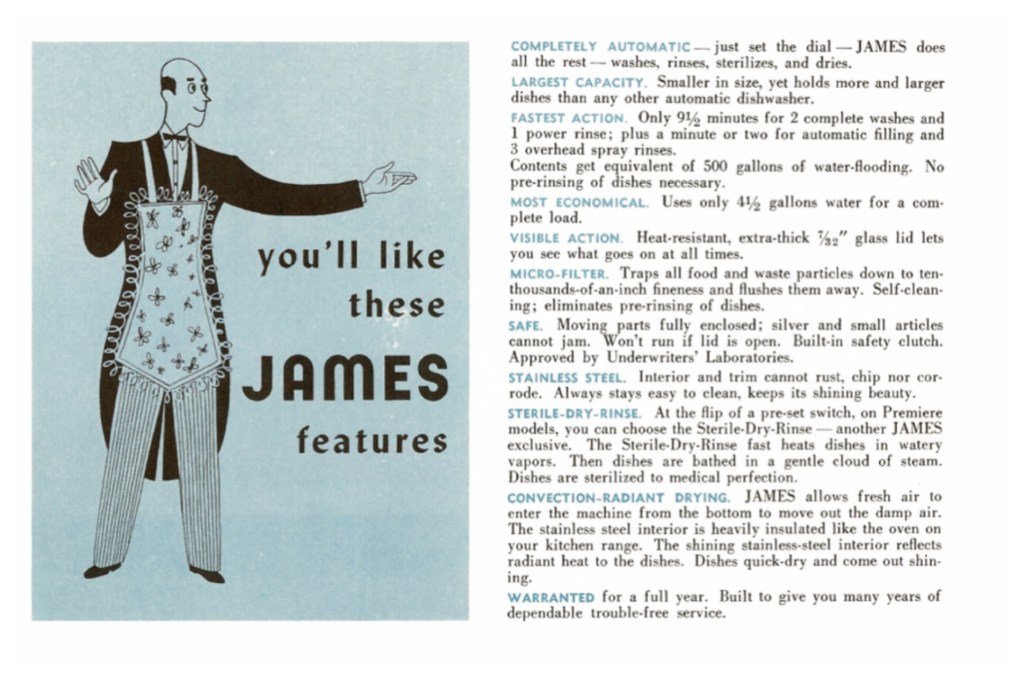
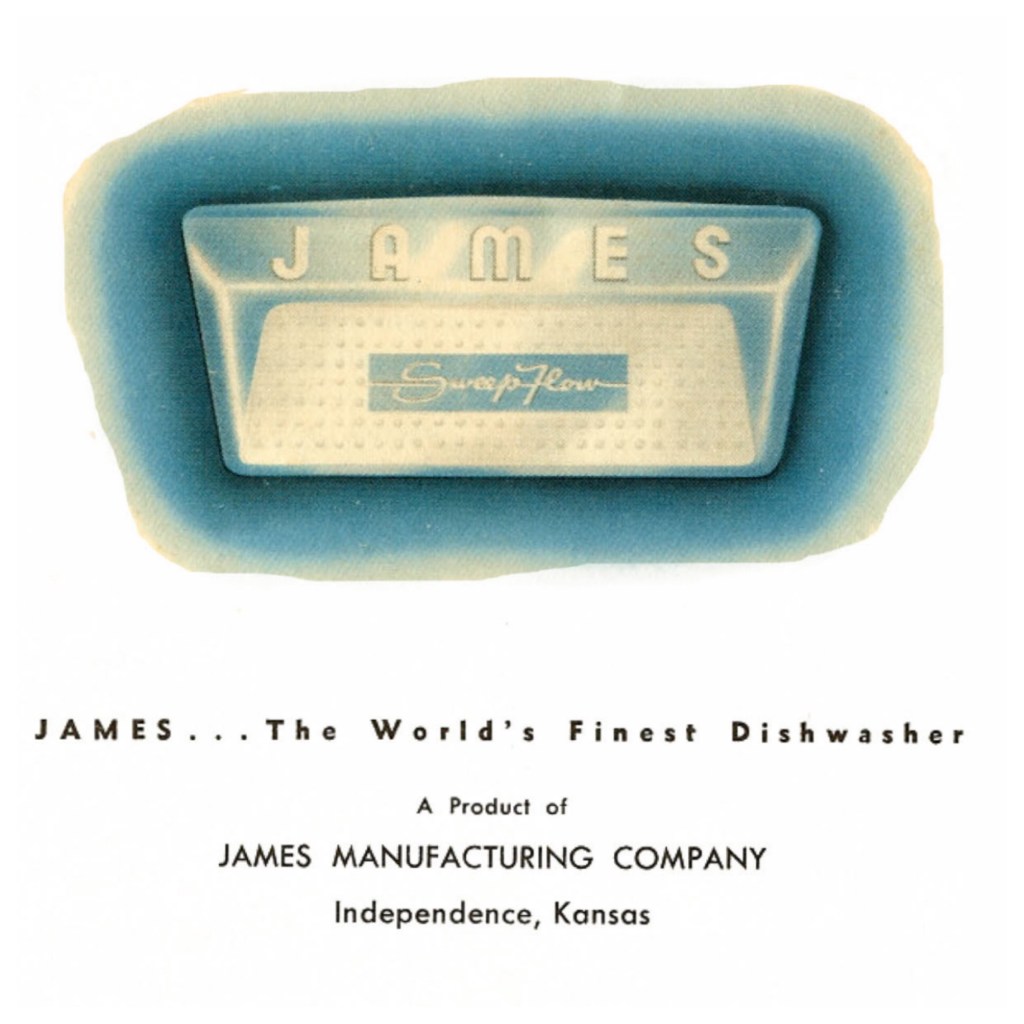
Back in my beloved “old neighborhood,” our next door neighbor was an inventor. Lewis James had several patents and a couple cool products to his name, most notably, the James Dishwasher.

Mr. James, with son Duane, were granted several joint patents throughout their careers. Their family business, the James Manufacturing Company, was in operation from the mid-1930s through the late 1950s in my hometown of Independence, Kansas.

The James Dishwasher was one of the modern miracles of its time and if you were lucky you had one in your home. Since the dishwasher was not fully integrated into most American households until the mid to late 1960s, and even well into the 1970s, families really ranked in the 50s and early 60s if they had a “James.”

One of the first models that characterized the look of the modern dishwasher, the “James” was a stand-alone with glass top enabling you to see the wonderment of automatic dishwashing right before your eyes.

Owner’s Manuel for the
James Dishwasher
Download purchased by
Gail Moore Woltkamp

Courtesy of Automatic Ephemera

Traditional advertisements for the James Dishwasher often appeared in “LIFE Magazine” in the mid-1950s, right during the time my dad and Mr. James became acquainted…

On Sunday afternoons, my dad, who was one of our hometown barbers, and Mr. James would sit in lawn chairs in the side-yard between our two homes, against the backdrop of my parent’s middle class 1950s white picket fence. My dad spoke fondly of these times in his life, recalling conversations about the stock market, the latest trends in the barber business and of course, Mr. James’s most recent inventions.

Independence, Kansas 🩵
Moore Family Collections

Although Mr. James passed away before I was old enough to remember him, his wife, Mrs. Faye James, who was a friend of my grandmother’s, became part of some of my earliest childhood memories.

My grandma stayed with me during the day and Mrs. James would stop over now and then for a cup of coffee and visit. Once in a while they would catch up while hanging sheets on the shared clothesline between our two homes, just like a scene out of the “Flintstones.”

Owner’s Manual for James Dishwasher

I will always cherish the era of my early childhood. My parents were married many years before I was born. Stories of their young married lives with no kids throughout the decade of the fifties and early sixties, always appealed to me.

I merely caught the tail-end of that classic period in American History where families were excited about the first suburb and new modern appliances. Most of my youth was spent in the mixed-bag decade of the seventies which seemed to bring a more chaotic approach to how we treated our surroundings and lived our lives.

The James home has had many residents since my childhood years. I don’t remember, exactly, when Mrs. James moved away. Suddenly she was no longer living next door and seven nuns had taken up residence. Many of our Sisters of Mercy worked at the local Mercy Hospital, which was situated caddy-corner to the West across the street from my house.

For me, this felt like a sign of the times. By then, I was in my last year of junior high school. The James Manufacturing Company had long since closed its doors, while the economy in our small Kansas town rode the changing tide of our country’s financial condition.

I have always felt a sense of pride and maybe a bit of luck that I got to spend the first eighteen years of my life in the same home and neighborhood. For most of my adult life I have lived more than three hours away in the Greater Kansas City Metropolitan Area with a few moves under my belt. Happily, I continued to visit and enjoy my hometown of Independence, Kansas for many decades after I left.

My dad passed away in 2004 and in 2014, Mom and I sold our longtime home in the “old neighborhood.” After sixty years of my family’s ownership, it was time for new neighbors to create new memories, new inventions…new Sunday afternoon conversations…about the signs of the times. 🩵

Application granted for
Dishwashing Machine
March 15, 1955
filed by James Inc.
Courtesy of

Google Patents and
National Archives at Kansas City
Owner’s Manuel for the James Dishwasher
Download purchased by
Gail Moore Woltkamp
Courtesy of Automatic Ephemera

I’ll Be Seeing You 🎺

By Gail Moore Woltkamp

My dad was a proud barber by trade but his affection for music, particularly jazz, was one of his most cherished pastimes. Sharing his music interest with me gave us a connection that I still feel to this day.

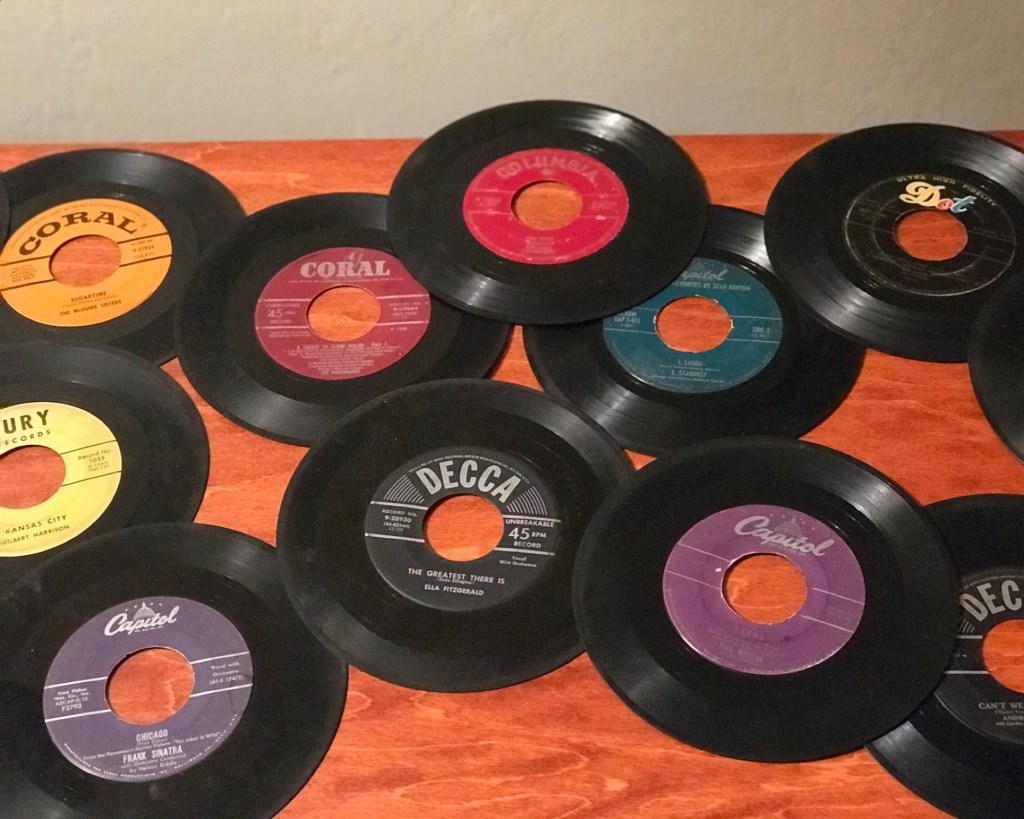
Dad was a jazz/blues/big band enthusiast to say the least. Among his various collections were records by Harry James, Ella Fitzgerald, Benny Goodman, Glenn Miller and His Orchestra, Charlie Bird Parker, Louie Armstrong, Duke Ellington, Buddy Rich, Gene Krupa…I could go on and on, and yes…I grew up listening to them.

I remember bopping around in our newly remodeled 1960s back porch den to “Rag Mop” by the Ames Brothers, and “Swing, Swing, Swing” by Benny Goodman. Dad would sing out loud to Lionel Hampton’s “Hey! Ba-Ba-Re-Bop” and I would repeat the lyrics back to him. Does anyone remember “Open the Door Richard”? I’m not sure any of my childhood friends were familiar with that one, but I certainly was. 😂

No more than six, seven, eight and nine years of age, I remember Mom and Dad dancing in the kitchen to “Moonlight Serenade” and me dancing with Dad to Billie Holiday’s version of “I’ll Be Seeing You.” Being introduced to various genres of music at such a young age has been one of my life’s favorite gifts.

Although I always felt special, I more than understand that I’m not. Many people have a love for jazz, blues, soul, big band and swing music. Hollywood has made sure there’s an abundance of films and biopics around those genres…”The Glenn Miller Story,” with Jimmy Stewart, “A Song Is Born” with Danny Kaye, “The Fabulous Dorsey’s,” featuring Tommy and Jimmy Dorsey themselves.

Recent cinematic history also does not disappoint. Dare I mention La La, but what actually comes to mind is “The Terminal” with Tom Hanks, which, if you can make it through to the end, is ultimately about Hank’s character’s father’s love for jazz music. I saw it right after my dad passed away, being completely surprised by this random yet touching ending.

I have often wondered if musicians of that era understood how they impacted their young fans, future artists and especially the music itself.

At our wedding reception both our parents joined Bill and I on the dance floor to “Moonlight Serenade.” Our older son, who is a saxophonist, was quoted in his college newspaper that his jazz interest came from his grandpa. My dad would have loved that.

“Parents Dance” to Glenn Miller’s Moonlight Serenade at our wedding in 1994 🩷
Standing with our son Ryan after he earned 1 ratings in
State Band Competitions at the
University of Missouri (2016)

With the passing of time, I went through a phase where I grew away from Dad’s music. Playing classic jazz and big band standards on his 1959 Zenith Hi-Fi Console was eventually replaced with early favorites from my own generation…The Carpenters, Donny & Marie, Grease Soundtrack, Olivia Newton John…then later…Journey, Boston, Styx, The GoGo’s.

As the gap in our musical preferences widened, Mom and Dad bought me a stereo of my own, giving me a whole separate set of memories from my own generation’s music. For whatever “life gets in the way” reasons, the classic High-Fi console officially went from collecting albums to collecting dust and sat quietly in the corner of our den for the next few years.

Now, as I listen to Dad’s favorites on my phone, I am transported back to all those familiar places while being grateful for my history and what his music has given me.

Dad…

“I’ll find you in the morning sun and when the night is new, I’ll be looking at the moon, but I’ll be seeing you.” 🌕

#bigbandmusic 🧡 #jazzmusic 🧡 #soul 🧡 blues #💙

What’s in a Name 🎥

My parents never really told me that I was named after Gail Russell, but the Golden Era Hollywood starlet was mentioned periodically throughout my childhood as one they both admired. Even in a time of no online perusing, they both knew that Russell had a significant career on the big screen, yet a tragic life cut short.

During conversations while sitting at our kitchen table, Dad would mention,

“You know there was a Hollywood actress named Gail Russell.”      

Although this was said to me several times, I never once asked if I was named after her. I’ve always been partial to my parents’ story that they took the first initial of my mom’s first name, Gerry, and the first initial of my dad’s first name, David, for my first and middle names respectively, Gail Diana. However, as much as my dad loved old Hollywood and as much as we watched classic movies together, I can’t help but wonder if Gail Russell was a fleeting thought when time came to give me a name. 

Hollywood actress, Gail Russell, with her only husband, Guy Madison, married 1949 and divorced 1954. Photo courtesy of Hollywood Confidential

I was born in the mid-1960s when the Golden Age of Hollywood was ending. My mom remembered watching The Wizard of Oz in a movie theater as an eight year old when it was first released in 1939. My dad told stories of “talkies” while growing up in Kansas and Oklahoma and remembered movie screenings for GIs while serving in the Infantry during WWII.

Motion pictures from all the big-name production studios seemed a big part of their lives. Both were well-aware of the public perception of particular stars of the 1930s-1960s and Russell was one who stood out for them.

I’m learning that Russell had a pretty tumultuous life. There isn’t anything that I could reveal about her that you could not just look up online, but if you are not familiar with this Golden Era beauty and tragic heroine, there are a few things I found interesting enough to share: 

Russell’s birth name was Betty or Elizabeth Gale Russell. After signing with Paramount at age 18, she soon discovered she suffered terribly from stage fright and later started drinking to calm her nerves. 

Often paired with big-name leading actors including John Wayne and Alan Ladd, she was known to captivate movie critics with her shy demeanor and classic beauty. In a sad twist, she preferred to spend time alone and longed to be a commercial artist, drawing and sketching throughout her childhood. Her mom, however, had other ideas, heavily pushing her into acting. 

Known for Angel And The Badman opposite Wayne, the post war drama Calcutta, opposite Ladd, Our Hearts Were Young and Gay and The Uninvited, Russel’s career spanned 18 years from 1943-1961, and to me, seemed successful. However, based on a newspaper story about her death, the press was not always kind. 

As her drinking escalated out of control, one source revealed that she tried to stop many times, adding that Ray Milland and Wayne were fellow actors who treated her respectfully, helping her run lines as she coped with her crippling anxieties.

Gail Russell and John Wayne, Angel And The Badman, 1947, Directed by James Edward Grant 
Photo Credit @Republic Pictures/Diltz/Bridgeman Images 

Russell died in 1961 at age 36 from malnutrition and liver damage due to alcoholism. She was found by a neighbor alone at her residence in Brentwood, Los Angeles, CA. 

In my eyes her fall from grace was both tragic and unique. Tragic that there were not more voices surrounding her telling her she was loved and finding her the proper help she needed. Unique that she knew exactly what she wanted for her life’s work but did not, or was unable, to pursue it. Tragic that she seemingly suffered through a profession far from what she was comfortable with, ultimately triggering her demise. 


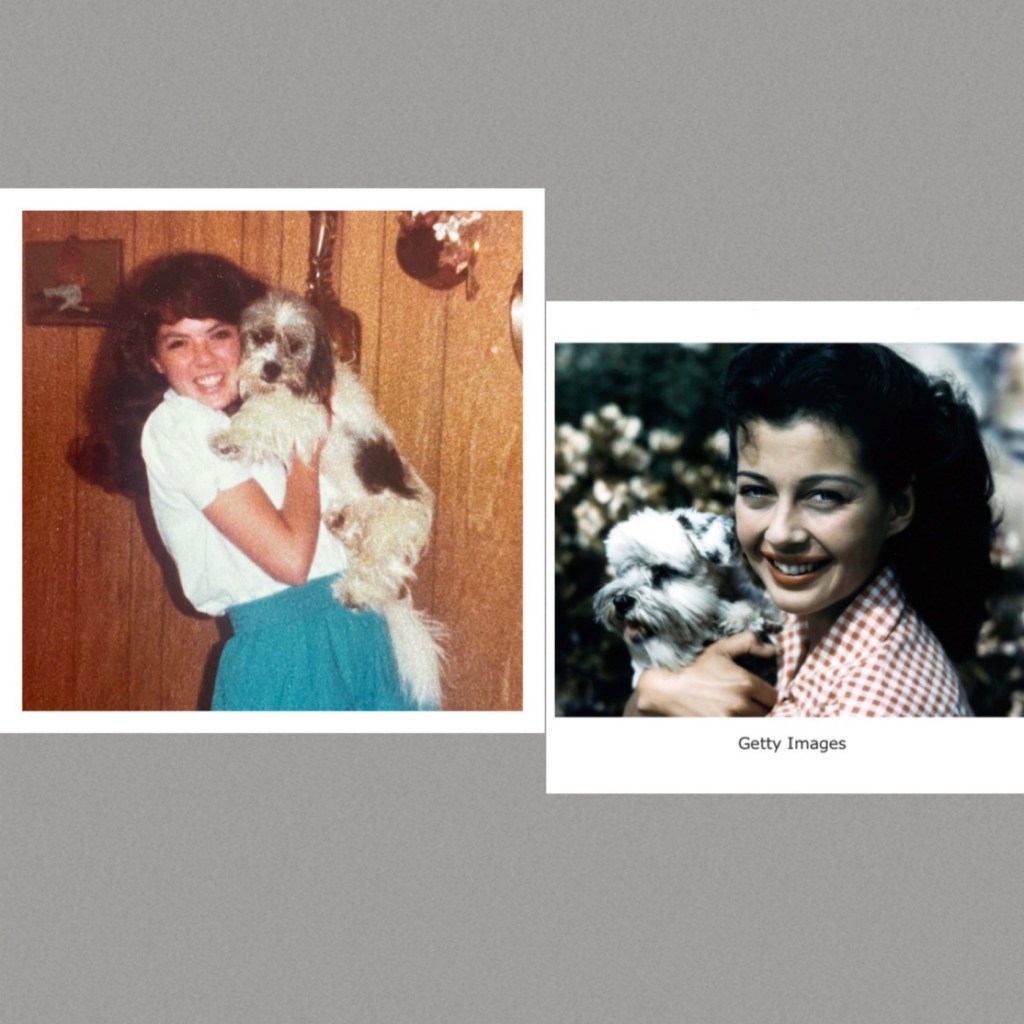
After seeing a photo of Russell and her dog, I recalled a similar one of me at 18 with my dog, Freeway.
Photo of Gail Russell courtesy of
Getty Images.

As someone who has suffered from anxiety, I have a profound appreciation for how she endured the relentless Hollywood spotlight for so long…but sadly, for what? In today’s world, who really gives a rats about industry executives telling you who you are, what you are supposed to look like, which spelling you should use for your name or how you should act?

What is a Golden Era Hollywood Actress’s life worth in years? In Gail Russell’s case the answer is eighteen…half her life. 

A few years ago I made my first trip to Hollywood. I took a brisk walk down Hollywood Boulevard’s Walk of Fame and the first star I happened to glance at was hers. How appropriate, I thought. I have never seen her movies, not one. If not for my parents’ appreciation for Golden Era Hollywood she would have been no more than a mere glimpse on my radar. But now, whether she inspired my first name or not, I’m happy she’s much more than that. 💛⭐️💛

Hollywood Boulevard Walk of Fame Photo by
Gail Moore Woltkamp

⭐️⭐️⭐️⭐️⭐️⭐️⭐️⭐️⭐️⭐️⭐️⭐️⭐️⭐️

#GailRussell #Hollywoodboulevard

#BridgemanImages #GettyImages

A Cherished Professor and The Italian Straw Hat 👒

By Gail Moore Woltkamp

One of my first articles I wrote for a newspaper was when I covered a review of a classic silent film, The Italian Straw Hat, by Rene Clair. It was presented by one of my favorite professors at Baker University in Kansas, Miss Nancy Richards. At that particular time in Baker’s history, we were lucky to have Professor Richards in the journalism and communications department, as she was there for only a couple of years before moving on to Chicago.

Richards is beautiful and was part of the reason I wanted to major in journalism. Her presentation, which was part of a silent film series, was intelligent, unique and charming, which is also how I would describe Professor Richards’ personna exactly.

The Italian Straw Hat is a 1927 silent film that holds a significant place in the historic cinematic world. A plot involving a bridegroom, a hat, a horse and a secret coverup before a pending wedding, it would be a disservice to describe the overall feel of the story as anything less than whimsical.

As Clair’s feature debut, it is considered one of his most notable, as well as one of the most durable French silent films in history. Based on the 1851 play by France’s Eugene Marin Labiche and Marc-Michel, Clair’s silent film version is a brave example of comedic timing and a worthy representation of his work in filmmaking.

In Professor Richard’s eloquent description, she spoke of how Clair was “continually experimenting with composition, movement and eventually with sound.” She mentioned through Clair’s career, he “never abandoned his liking for fantasy or the absurd.” His personal style of filmmaking, she suggested, was displayed best in this particular work.

In my article, I went on to quote Richards in her description of the film as “neat and precisely timed” as she noted the film’s structure is “perhaps its greatest strength.” Richards further explained, The Italian Straw Hat was actually released one year after Warner Brothers’ sound-on-disc film, Don Juan, although it was not the last silent film ever made.

I would presume throughout my life, I would not have cared too much about particular silent films, their plot-structure or timing, if not for Professor Nancy Richards. The likes of Charlie Chaplin, Greta Garbo or even Lilian Gish, all with whom I am familiar, fall short of filling me with too much intrigue. 

Professor Richards, however, has been unforgettable. Her work ethic and knowledge of film and journalism, combined with the example she set, stuck with me. She compelled me to think and reach beyond my own interests, and for that, I am eternally grateful. 💛 ✨

Baker University Professor Nancy Richards,
Mass Communications/Journalism
Photo Credit Gary Collins/ Baker Wildcat 1986

#theitalianstrawhat

#reneclair

🧡💚🧡💚🧡💚🧡💚🧡💚🧡💚🧡

Stanwyck Earned her Groove 🎥 ⭐️ 🖤

My dad loved old movies. Many of his favorites came from the decades of the thirties and forties. I grew up spending Sunday afternoons with Ma and Pa Kettle, the Bowery Boys, Shirley Temple Theater, and maybe a couple Judy and Mickey musical dandies thrown in.

I loved watching all the old stuff with my dad. Something about it felt safe. There was always something genuinely funny about each of the films or shorts and they usually ended on a happy note.

With my dad at a surprise retirement party for my mom in 1991

From my own generation’s sitcom end of things, I never made Dad sit with me to watch things like “The Partridge Family.” Although if I had, I’m sure he would have given me his opinion that Shirley Jones was once upon a time in her musical genre era…worth watching.

In the summers during my junior high school years, our front living room with twenty-five inch Zenith console was usually all mine after Mom and Dad went to bed.

One late summer night, I found a Barbara Stanwyck movie, “Stella Dallas.” Now by the time I was thirteen, I was versed in the Stanwyck classic, “Christmas in Connecticut,” thanks to my dad, but I had never seen “Stella Dallas.”

If you haven’t seen this movie, it’s actually a little disturbing. Stella’s outspoken wardrobe, with clunky hats and oversized bows, is almost clownish as the character is portrayed as not succumbing to social stereotypes or traditional societal expectations.

Maybe it was my age at the time, but my initial impression of the movie was that it dragged. Several trips to the kitchen to make popcorn and back to my magenta- flowered sleeping bag, I managed to stick with it. By the final scene I was touched to tears and then, in return, the movie stuck with me.

The next day all I could think about was how much Stella did for her daughter. She put herself in such unforeseen situations. At my precarious age of thirteen, it upset me how awkward and over-the-top she looked in her wardrobe. I felt sorry for Stella when she overheard her daughter’s teenage friends make fun of her behind her back. How could they?

Her daughter, played by Anne Shirley, did all the right things throughout most of the movie. She stuck by her mother’s side, putting her first when she had a choice. However, in Stella’s effort to give her daughter a better life, the two eventually parted ways.

In years since, I have never forgotten that classic final scene where Stanwick is standing in the rain outside the church of her daughter’s well-to-do wedding. She could see, just barely, the kiss between her and her new groom. Stella then tearfully walked through the misty city neighborhood, sad, but with a feeling of greater good, that she had fulfilled her job as a mother.

Okay, what?

This parenting style certainly wouldn’t fly with today’s high-powered-fuel-injected helicopter mom! 🤣

Nonetheless, Stanwick and Shirley were nominated for academy awards, the portrayal of Stella went down as one of Stanwick’s signature performances and all is well on the “old movie” front.

Barbara Stanwyck in a final scene from “Stella Dallas,” a 1937 film nominated for two academy awards: one for best actress for Stanwick and the other for best supporting actress for Anne Shirley.

When I look back and explore why this film stuck with me, I arrive at two things: empathy and appreciation…and of course, these sentiments, in all their sincerity…are intended for moms.

My mom was classy, stylish, had a great office job lasting forty years at a pipeline company, maintained many friendships over the years and seemed close to perfect. But I guess the movie made me realize how lucky I was to have a mom who did so much for me and I hoped no one would ever poke fun or make light of her sacrifices.

With my mom on Easter Sunday in 1972

Mom was not as passionate about old movies as was my dad. She would often peek in the back den where Dad spent the majority of his leisure time and ask “What are you two watching this time??” “That’s Gary Cooper!” “He must be a hundred years old.”

Some of my most cherished childhood memories are centered around particular old movies… “A Christmas Carol”, “Citizen Kane”, “The Best Years of our Lives”…all of which, my mom would call out the lead actors and announce they must be a hundred or dead. 🤣

Mom keeping it real on the leisurement of old movie watching enhanced my enjoyment of the film as well as my pride of being their daughter.

Today, I relish those memories with the three of us. Those moments that ultimately play a small part in forming who you are as a person later in life.

A few months ago I found “Stella Dallas” on Turner Classic Movies. I had not seen it since my original viewing back in 1979. Aside from a few plot details, my memory of it was pretty accurate. I can’t say why certain performances resonate more than others, but I can say that Stanwyck as Stella earned her groove with me.

🍋💛🍋💛🍋💛🍋💛🍋💛🍋💛🍋

Popular Pipelines Remembered 🦕

Sinclair Pipeline Company 🦕💚

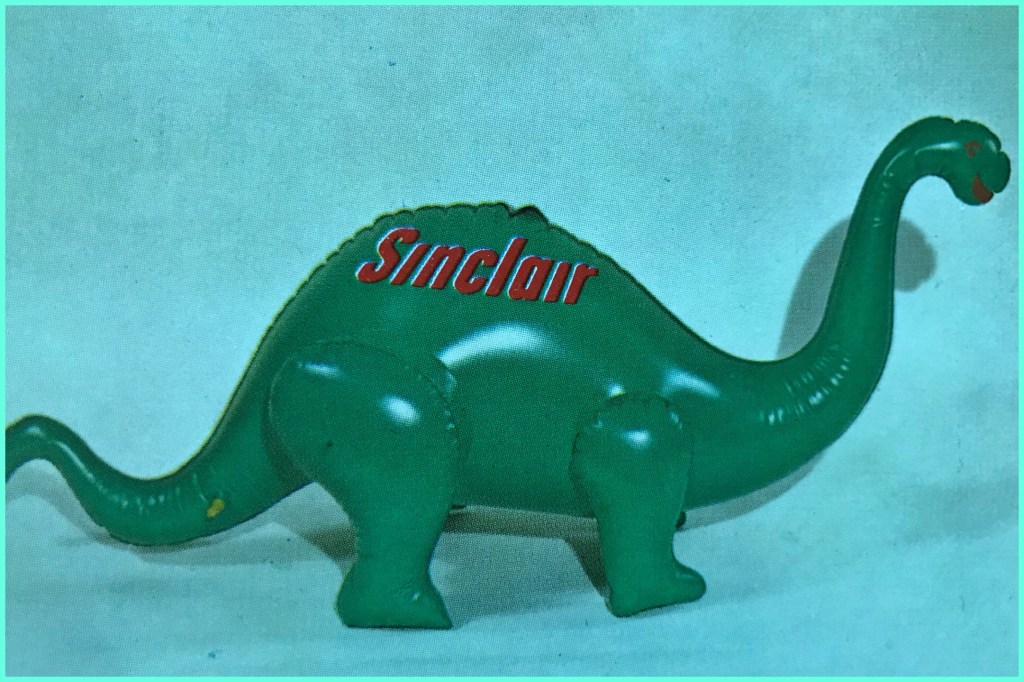
One of my first toys as a child was an inflatable Sinclair Dinosaur. Many pictures of my early childhood years show me sprawled out on a blanket with that green dinosaur. Various Sinclair collectibles graced my home during those early years. This was because my mom worked for Sinclair Pipeline Company, (affiliate of Sinclair Oil Corporation), in Independence, Kansas.

By the time I was born in the mid-1960s, Mom was on her sixteenth year of working as an executive secretary for Sinclair. The company, itself, was on its sixtieth. Unique for a town that reached it’s peak in population at around 12,000, (and, by the way, where Harry Sinclair grew up), the headquarters in Independence, Kansas was a substantial operation employing a large percentage of Sinclair’s workforce.

Image from “A Great Name in Oil: Sinclair Through Fifty Years”

Merger and ARCO Pipeline Company ❇️

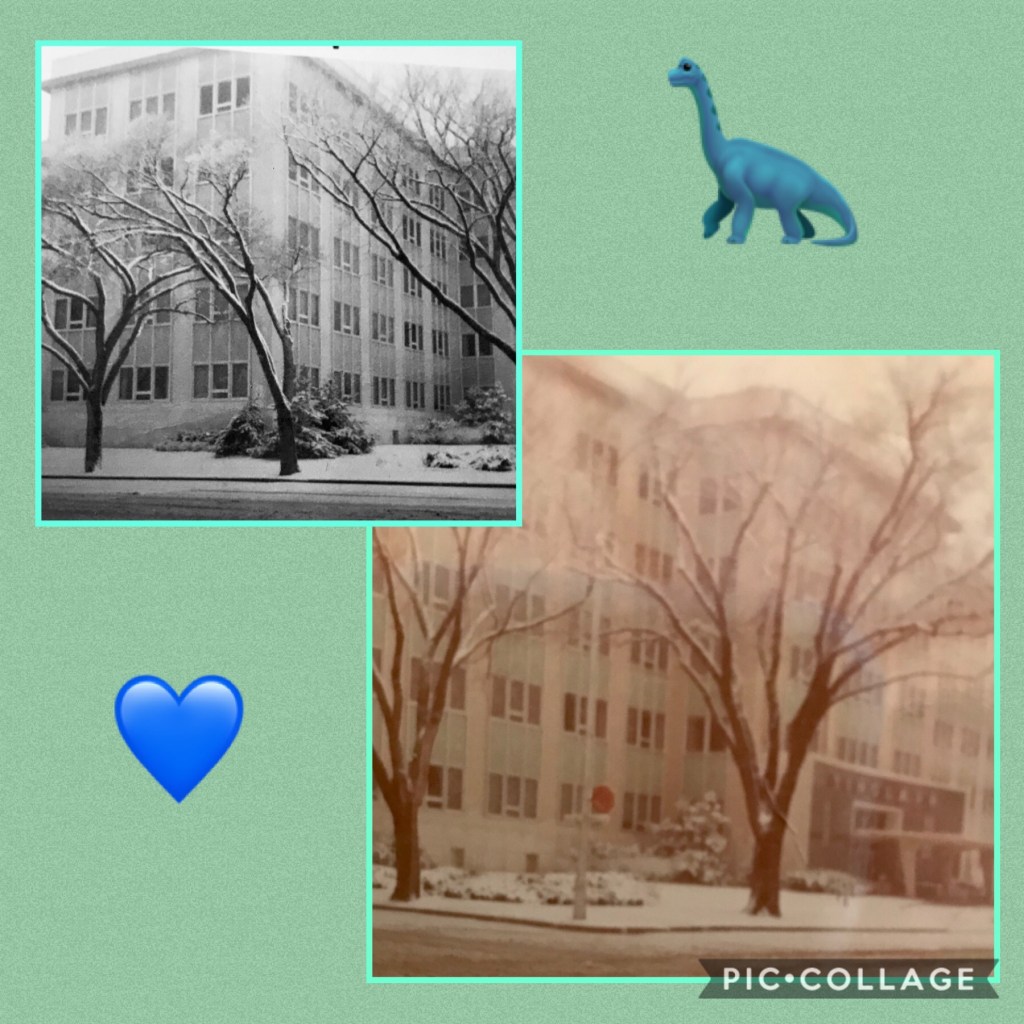
When I turned three, in 1969, Atlantic Richfield Company (an already merged entity between Atlantic Refining Company and Richfield Oil Corporation) acquired the Sinclair holdings, becoming ARCO Pipeline Company/Subsidiary of Atlantic Richfield. For the next twenty-six years, this subsidiary served as a headquarters and remained in the five story Independence office location.

Sinclair Pipeline Company (later, ARCO Pipeline) Independence, Kansas
1960s Contributed photos by
Moore Family Collections

Many of our close friends and family members held office jobs in the classic and now historic building located near the town’s downtown area. The company’s contribution to the overall health and wealth of the town’s economy was immeasurable.

Through the late eighties and early nineties, ARCO gradually transferred its Independence offices to new locations. By 1995, remaining departments officially relocated, capping off nearly eighty years combined, through each company’s tenures, in our unique Kansas town.

Prairie Oil and Gas Company 🤎

The Prairie Oil and Gas Company was a rival of Harry Sinclair’s. Established in 1900 with roots from the Standard Oil Company of New Jersey, the company was bought by Standard Oil’s Prairie Pipeline System and then acquired by Sinclair in 1932. This, of course, is the abbreviated version of its early evolution, as pipeline companies traditionally and consistently endure mergers and acquisitions.

Office Locations

Within its first four years, the Prairie Oil and Gas Company’s office space and refinery were located in Neodesha, Kansas, twenty miles north of Independence. The compilation, “Oil And Independence” by R.L. Wells, reveals the Prairie Oil and Gas Company moved its offices from Neodesha to Independence in 1904 to a space inside the town’s Carl-Leon Hotel.

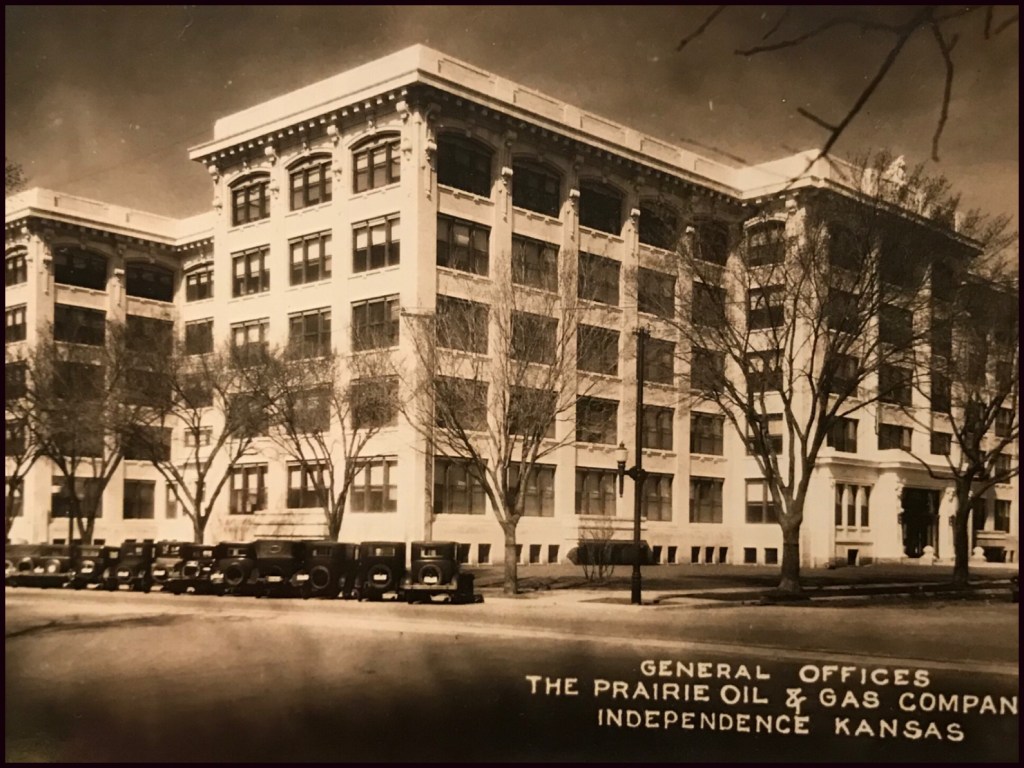
In 1916 a new office building was erected for the Prairie Oil and Gas Company on the corner of 9th and Myrtle in Independence. The company would operate in this location until becoming home to Sinclair Pipeline Company, then finally, ARCO Pipeline. Later the structure underwent a more modern look as shown in my previous photos.

Prairie Oil and Gas Company building erected in 1916 on the corner of 9th and Myrtle, (Now 200 ARCO Place), Independence, KS.
Postcard courtesy of Moore Family Collections

Original Pipeline in Oklahoma 🧡

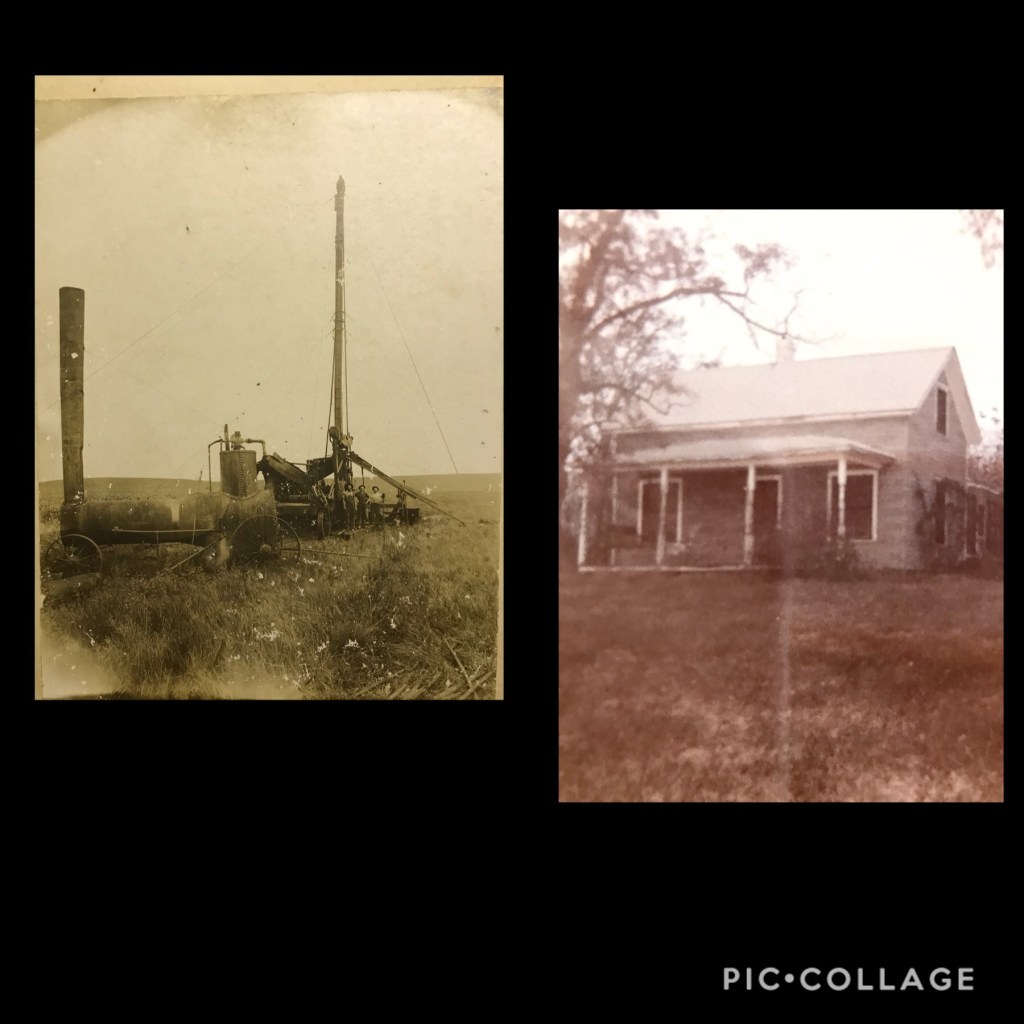
Prairie Oil and Gas built its first pipeline in Northeast Oklahoma running from Bartlesville to Humboldt, Kansas. One of its earliest projects was to extend a pipeline north into Copan, which was once Indian Territory.

This area, now Washington County, is where my dad’s family farm was located from the early 1900s through the early 1970s. My dad’s uncle was employed by the company when the original pipelines were being built through that area.

Information on the “History of Bartlesville and Washington County” website reveals that Prairie Oil and Gas also initiated Oklahoma’s first ever storage tank that carried oil and gas by rail from the Bartlesville Train Depot to its refinery in Kansas.

Early 1900s oil derrick and my great grandparent’s original farmhouse on their acreage in Washington County, Oklahoma
Photos courtesy of Moore Family Collections

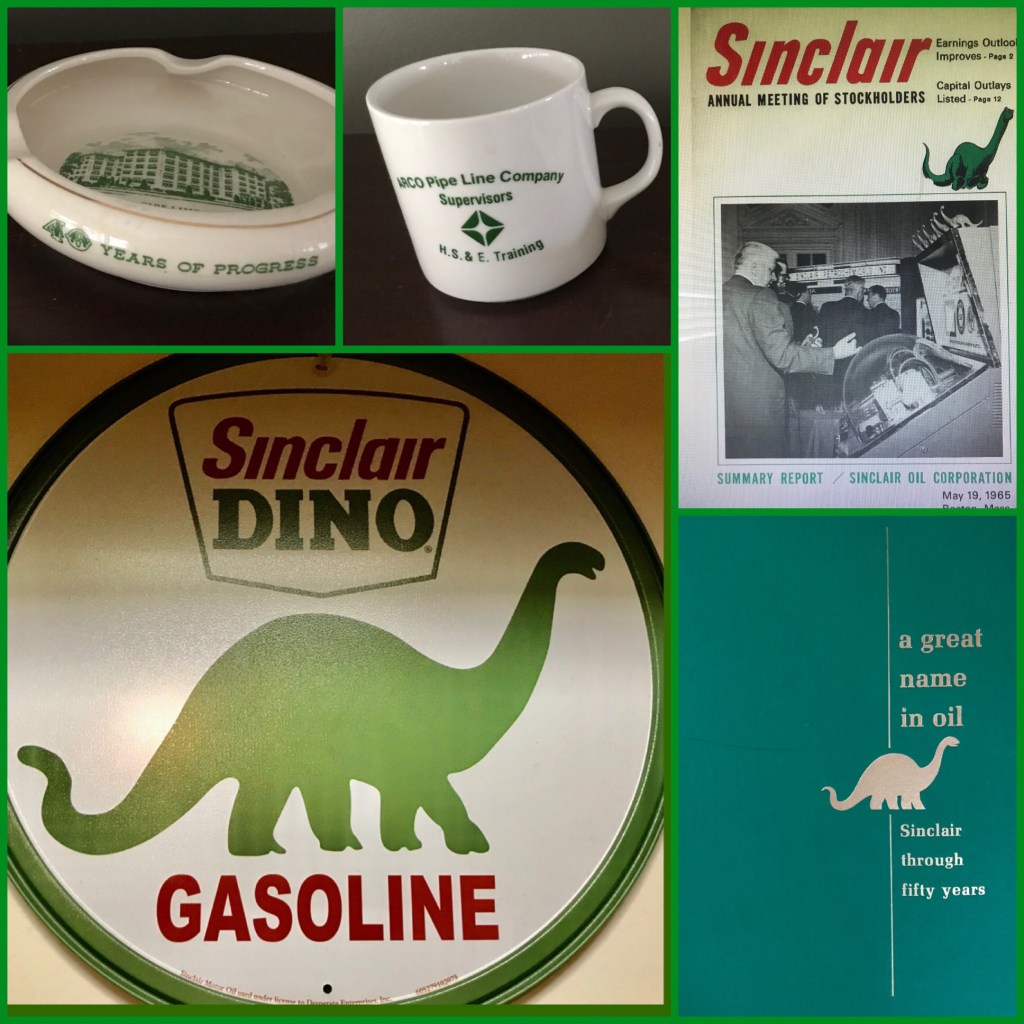
My mom retired from ARCO in 1991 after forty years of service to the company. Although my green toy dinosaur is long gone, I still have a Sinclair ashtray, ARCO coffee mug, roadmaps and a brochure or two that are all part of my Independence, Kansas collections.

Sinclair and ARCO items that are part of my personal collection 💚

Sinclair and ARCO collections are on display at the Independence Historical Museum and Arts Center, located at 8th & Myrtle Streets in Independence, Kansas, a block away from the “ARCO Building.”

Many valuable sources relating to the petroleum and pipeline industry used for this piece can be found in my references.

Find out more! 🦕 ❇️ ⛽️💙

References 🦕

A Great Name in Oil: Sinclair through Fifty Years; F.W. Dodge Company, 1966

History of Bartlesville and Washington County, Oklahoma website

Oil And Independence; Compiled by R.L. Wells; November 12, 1987

https://www.okhistory.org/publications

🍋💚🍋💚🍋💚🍋🦕🍋💚🍋💚🍋💚🍋

A Nod to Napco (National Potteries Corporation) ❤️🤍❤️

By Gail Moore Woltkamp

It simply wouldn’t be Christmas without her. The vintage ceramic “cold paint” angel passed down to me from my grandmother is a keepsake I look forward to displaying year after year. Aside from her festive style and intricate design, it’s her signature Napco marking that confirms her authenticity to prime collectors.

Family Treasure
Napco Christmas Bell Angel with 1956 Marking

Photo by Gail Moore Woltkamp

Ohio Roots

National Potteries Corporation (Napco) was established in 1938 opening its doors in Bedford, Ohio, southeast of Cleveland. During its first peak in popularity, (the 1950s and 60s), the company distributed a variety of collectibles depicting the times, with products like birthday and Christmas angels, Lady Head Vases, (Remember the Lucille Ball one?) planters, ashtrays and nursery rhyme figurines.

This explosion in production of novelty items made them a much-familiar sight in my Midwestern household and I’m sure in others across the country.

Since I have long admired many of my family treasures, I decided to research more about the company. A quick discovery was “Napco: A Schiffer Book for Collectors,” by Kathleen Deel, which I purchased, and contains great info on various Napco collectibles.

Known for being well-designed, Napco’s products stand out with a “cold paint” technique, referring to the outside finish of the ceramic item. The first coat consists of a clear glaze finish that’s been fired in a kiln. The item is then decoratively painted with cold paint.

Vintage and Today

The company’s success in maintaining its staying power reflects its ability to keep up with consumer interest along with leveraging the vintage marketplace.

In Napco’s vintage world, each product is marked with various paper labels, foil seals or markings featuring wording such as: “A Napco Collection;” “Napco originals by Giftware;” “National Potteries Co., Cleveland, OH; and “Napcoware, Import Japan.” fromgrandmastree.com

Napco cookie jar, purchased as a gift for my grandmother in 1978. The red and gold foil seal is one of many variations of authentic Napco labels
Photo by Gail Moore Woltkamp

Today, Napco has an extensive product presence through online sales platforms like eBay, Pinterest and Collectors Weekly. The website, Napcoimports.com, has an impressive online catalog, and touts a customer-driven product line with a 150,000 square foot distribution center in Jacksonville, Florida.

NAPCO Marketing Corporation, a wholesale distributor of floral and plant containers, sells similar products and is owned by 1-800-Flowers.com, Inc.

To keep my family’s 1950s holiday nostalgia intact, I will someday pass down my cherished “cold-paint” Christmas angel, along with some other novelty keepsakes. After all, Christmas would not be Christmas without Napco! 🎁⛄️🎁

References

1-800-Flowers.com, Inc.

collectorsweekly.com

Deel, Kathleen; Napco, A Schiffer Book for Collectors; Schiffer Publishing Limited, 1999

fromgrandmastree.com

https://www.napcoimports.com

🎁🌲🎁🌲🍋🎁🌲🎁🎄🎁🎄🍋🎄

Landmarks Lost : Reflections of a Kansas Town 🌻💛🌻

By Gail Moore Woltkamp

Notable landmarks that were once part of my life and neighborhood while growing up in Independence, Kansas, are now gone. Some, I consider historically significant, not only to my life, but to the town and to the state of Kansas.

Mercy Hospital 🩵

Something that seemed unprecedented, from the time of selling my childhood home in 2014, was that Mercy Hospital, part of the Mercy Hospital System, closed its doors, partially due to the Kansas decision not to expand Medicaid under the Affordable Care Act.

The hospital closed in October of 2015, but months before that decision was final, the town had found itself losing doctors and its number of patient visits were declining. The result was no more hospital for the roughly 9,000-person community and for other areas it served in Montgomery County.

Mercy Hospital was within clear view of my childhood home in Independence, KS.
Standing in my old neighborhood on Myrtle Street with hospital in the distance (1970 )
💙

My beloved old neighborhood really is empty. The original part of the hospital, founded by the Sisters of Mercy and established in 1927, along with its unique counterpart, an architecturally rounded addition, built around 1959, are both gone.

Like so many of my friends and family members, I was born in that hospital. My grandmother worked there as a registered nurse in the 1930s and 40s. My mom was a longtime volunteer for the Mercy Hospital Auxiliary and my dad was born in May of 1928 in one of the hospital’s original units.

A Welcomed Solution

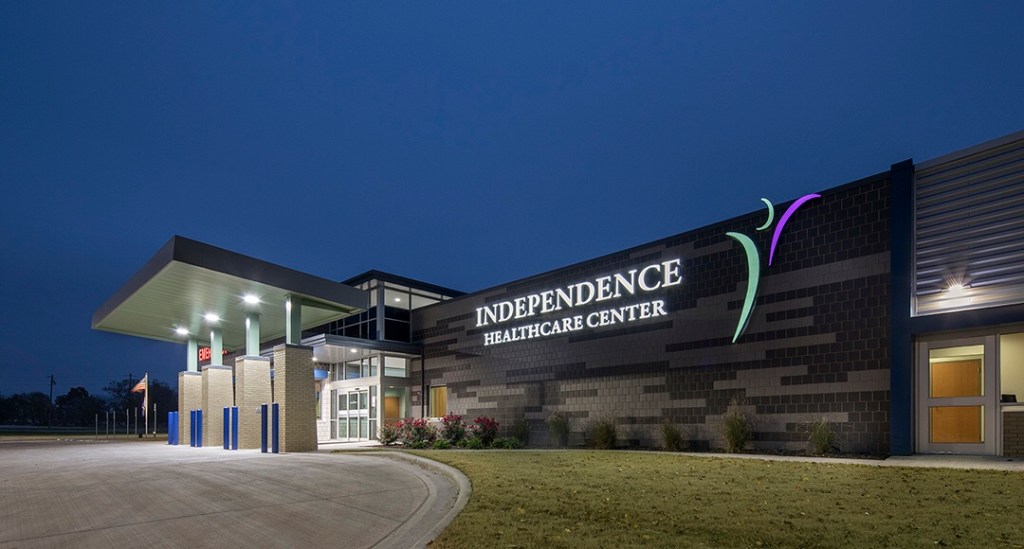
Mercy Hospital’s closing initially imposed a deeply chaotic and disgruntled impact on the local area. However, a welcomed solution came along two years later in 2017 with the opening of the Labette Health/Independence Healthcare Center. This rural health clinic with state-of-the-art facilities includes an emergency room and small cancer treatment center. The facility is located further west of town, not in my old neighborhood.

Nonetheless, Brian Williams, President and CEO of Labette Health, (nearby Parsons), secured a $6 million dollar low-interest loan from the U.S. Department of Agriculture. Adding this to the $1.6 million dollars raised in local funding, a winning alternative to a full-fledged hospital was created.

Labette Health Independence Healthcare Center serves Independence, Kansas and parts of Montgomery County. The facility, designed by HFG Architecture, opened in 2017.
Photo copyrighted by Steve Rasmussen

Lincoln School 💛

When I was growing up I attended Lincoln School, which was located directly across the street from my house and East of the hospital. The solid white Art Deco-style school was architecturally and structurally sound, built under the Works Progress Administration (WPA) in 1939-40. My memories of it are vivid and many of my closest friends, to this day, are ones who attended Lincoln.

View of the south side of Lincoln School on
Myrtle Street in Independence, KS (1970)
(Photo courtesy of Moore Family Collections)
Backdrop of my life: 💙
Lincoln School was a perfect view outside the front door of my childhood home in Independence, Kansas

I remember during my Kindergarten year, winter of 1971, we had a huge snowfall, nearly up to my waist in some parts of our yard. Because the streets had not been cleared in time for morning Kindergarten, my dad carried me across the street onto the steps of my Kindergarten class.

I have never forgotten that day–how special I felt because I lived so close to the school, and the effort of my dad to make sure I stayed safe and dry.

The bus kids to me, however, were the lucky ones. In extreme cases, if school was in session before the weather hit, they were often dismissed early. Although it seemed back then, school was always in session. Rain or waist-high snow, my across-the-street-residence gave me no excuses.

Winter scenes from the early 1970s in my hometown
neighborhood in Independence, KS.
Photos: Moore Family Collections

Demolished

Shortly after closing its doors in 2011, Lincoln School was demolished in a plan involving Mercy Hospital and its need for a helicopter landing pad. The community adjusted okay to this change. Due to a shrinking population, Independence needed only two public elementary schools as opposed to three and raised funds to secure a section of land and build a new school on the other side of town.

Pictured is Lincoln School’s playground area, East of Mercy Hospital, across from my childhood home in Independence, KS.
Demolished in the Fall of 2011.
Photo by Gail Moore Woltkamp

Consequently, the helipad was used for only four short years due to the closing of the hospital. My mom missed hearing the happy sounds of the school kids playing on the playground during their recess time. It really was a welcomed familiarity that kept her company. Her view out of her screened-in-front porch for the final year of the previous sixty that she lived in that home was unfortunately an empty lot.

Still a Vibrant Community 🌻⭐️🌻

In recent years Independence has experienced a slight decrease in population and a change in its overall economic growth. Some of these factors were noticeable even before the pandemic hit, yet the town appears to sustain a vibrant, hopeful spirit.

The community has innovative leaders and dedicated citizens who keep their rich traditions alive, support their existing local businesses and look for ways through the Main Street program, Chamber events and festivals to keep volunteers active.

Neighbors helping neighbors improve their homes, residents coming up with unique ways to enhance the downtown area, are all things that have helped the town’s viability.

My old neighborhood is different, yet sustainable. Its fight is long but worth its journey. 💛🌻💛

References

https://www.labettehealth.com/clinics/independence-healthcare-center-rural-health-clinic/

https://www.kcur.org/health/2017-08-23/new-health-care-center-helping-to-fill-void-after-closure-of-southeast-kansas-hospital

http://www.newson6.com

https://www.labettehealth.com

Home

💛🌻💛🌻💛🌻💛🌻💛🌻💛🌻💛🌻