
By Gail Moore Woltkamp
My first introduction to William Inge’s Come Back Little Sheba, was the Burt Lancaster, Shirley Booth movie version from 1952. Booth won an Academy Award for her performance as Lola, a role she originated on Broadway and one which garnered her a Tony Award.
I’m not sure which writer in our literary history depicted 1920s-1930s Midwestern life in the most accurate light, but Pulitzer Prize Winning Playwright William Inge seemed to have a pulse on the struggles of everyday family life and a gift for describing the lonely, more vulnerable aspects of individuals of that era.
Inge’s work as a playwright emerged during the 1950s, the decade before I was born. His most notable plays were written and inspired by remembrances of his childhood and people in small town Kansas, specifically, my hometown of Independence, during the 1920s and 1930s.
Rumor has it, some of his characters throughout his body of work were inspired by the locals.
His fourth play on Broadway, The Dark at the Top of the Stairs, (1957), a revised version of his original play, Farther Off From Heaven, (1947), is widely considered his most autobiographical.
By my teenage years in the 1980s, I certainly didn’t know any friend, neighbor, teacher, businessperson or other who may have landed as fodder for Inge’s guilty-pleasure-subject matter.
My parents, though, who were young adults during the 1950s and lived and worked in Independence, a decade and a half younger than Inge, may have had some thoughts. 🤣
At the end of the day, his two novels, Good Luck Miss Wycoff, (1970), and My Son is a Splendid Driver, (1971), along with compilations of his plays, graced our book shelves for my entire childhood.
As for the movies…most were adapted screenplays based on his plays and if we could catch them airing on a local channel, my dad and I were all in!
A favorite on a given Sunday afternoon was the beautiful Natalie Wood, who portrayed Deanie in Splendor in the Grass, (1961), with Warren Beatty as Bud. A highlight was seeing a short glimpse of Inge himself portray a pastor in the desperate small town setting.
For Splendor, Inge won the Academy Award for Original Screenplay. It was one of three Inge works written directly for the screen, although scholars may have a slight correction on that number, due to him using a pseudonym for one and being asked to help write the other.
For most Inge enthusiasts, Picnic goes without saying. The play premiered on Broadway in 1953 and Inge won the Pulitzer Prize for Drama.
The 1955 movie with Kim Novak and William Holden, directed by Joshua Logan and adapted for the screen by Daniel Taradash, is a Hollywood treasure that I used to think I could keep all to myself.
My dad knew fun facts about Golden Era Hollywood and would point out the famous dance at the picnic with blended instrumental songs, 1930’s “Moonglow” and “Theme from Picnic,” as the scene that put the movie’s popularity over the top.
I recently read Inge’s subsequent rewrite, Summer Brave, (1962), with a different ending, that Inge once commented was the original version of Picnic, and the one that he preferred.
Picnic was filmed in several small Kansas towns, but not Independence, because apparently it didn’t look like a typical Midwestern town.
Skipping forward to my young adult life, my husband and I were on a trip from Kansas City to Colorado, traveling west down I70.
Bill, who did not grow up in my hometown but knows how much I cherish its history, said emphatically, “We’re taking a short cut.” I was like “What are you talking about?”
He turned off the main interstate and drove down Highway 50 toward Hutchinson, Kansas up to the enormous grain elevators filmed in Picnic.
I jumped out for a picture. I’ve read the play and watched the movie many times but this was kind of a crowning moment! 👑 😎
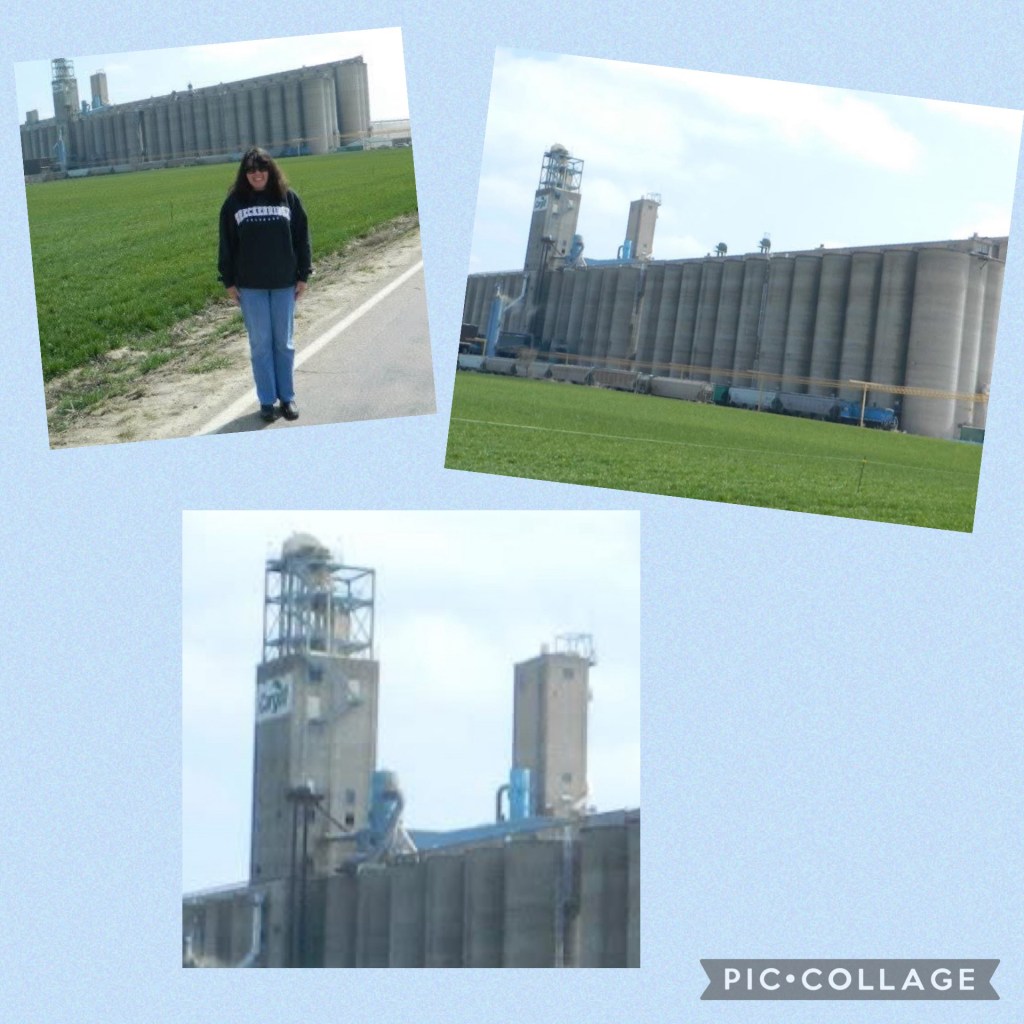
East 4th Avenue and North Halstead Street
Hutchinson, KS
Coming Back to Little Sheba, (Inge’s first play on Broadway, 1950), Bill and I recently saw a production at the American Blues Theater in Chicago, in March of 2026, with some amazing talent.
The cast particularly nailed the deep and uncomfortable parts… the recovering alcoholic, and stoic and protective Doc, whose anger explodes toward the end; the depressed and conditioned Lola, who gets through each day by seeking the return of a lost dog, emotionally shielding a much greater loss.
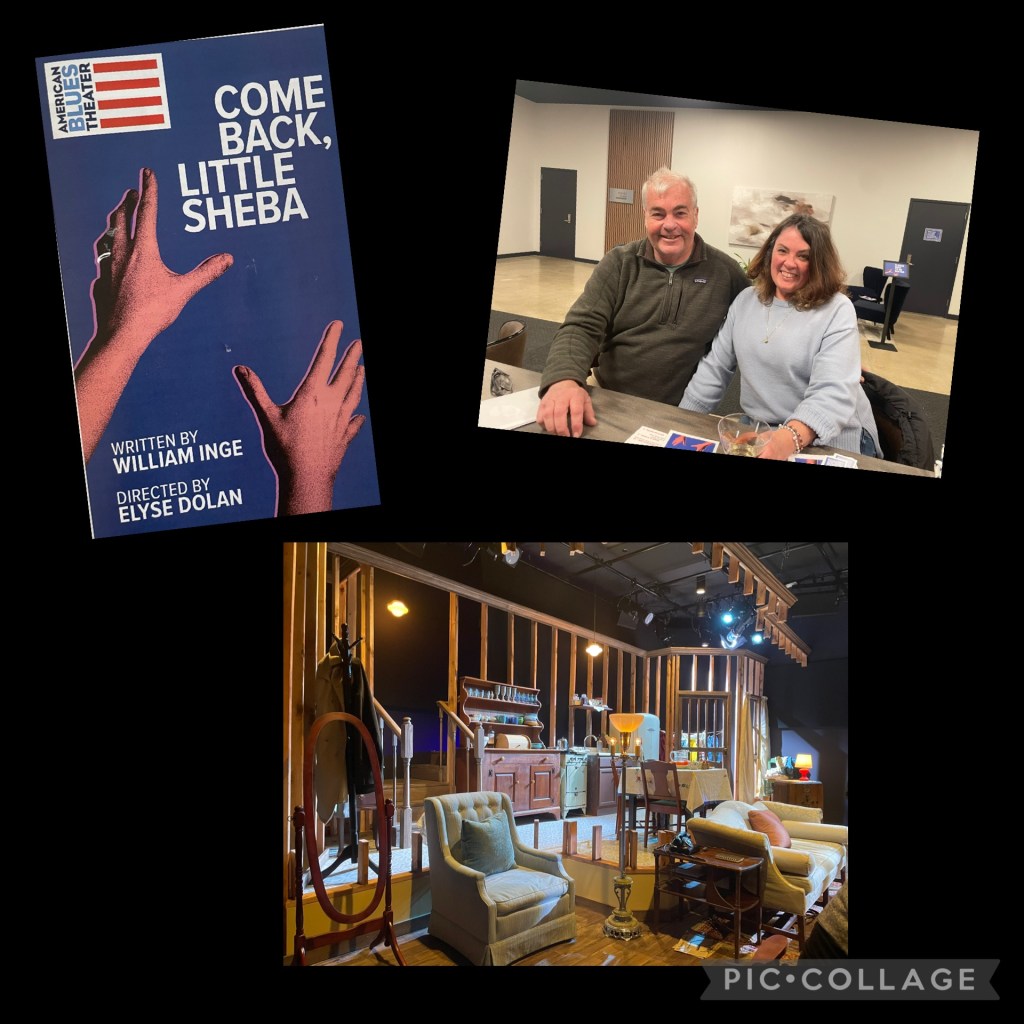
Come Back Little Sheba
The American Blues Theater
Chicago, IL
For all of Inge’s sadness and deep despairing plots, he managed to weave in certain characters to balance out the trauma while hitting a chord with the realities of small town Midwestern life.
His counterparts to Doc, Lola, Deanie, Bud or even Picnic’s Madge Owens and Hal Carter, have to be his characters from “Sheba,” Marie and Turk.
They represent playful, unrestrained youthful energy, the thrill of young summer romance, if only for a fleeting moment in time.
Although I have so much more to say about Inge:
a favorite son of my famous hometown, his 1973 suicide, seeing local performances of Bus Stop and “Sheba” in different cities around the country, an annual festival in his honor since 1981—all that said, I am ending on this note:
I recently read a summary about one of his two novels, My Son is a Splendid Driver.
A review of the first half of the book regarding Character Joey’s family and childhood is described as “lovely scenes as clear as the Summer Sunlight.” Something about that sentiment sparked a reason for me to write about Inge.
I think in these really hot, but meaningful, End of Summer Days, leading up to Labor Day Weekend and the setting for his most famous play, Picnic, Inge’s work can still be seen as relevant even fifty years after his death.
His legacy is “as clear as the Summer Sunlight” and I delight in knowing my personal history shares a small part of that. ☀️
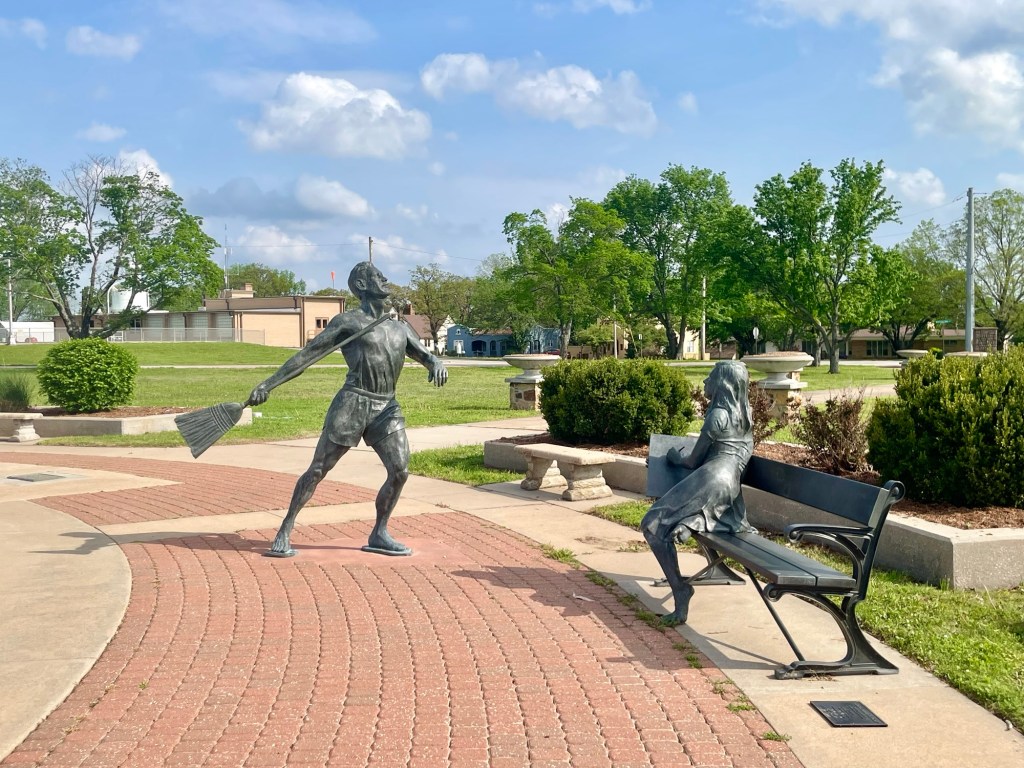
Come Back Little Sheba written by Pulitzer Prize Winning Playwright William Inge
Riverside Park and Ralph Mitchell Zoo
Independence, Kansas
🍋☀️🍋☀️🍋☀️🍋☀️🍋☀️
Kirkus Reviews. Review of My Son is a Splendid Driver, by William Inge. June 14, 1971
Memories of Spendor: The Midwestern World of William Inge; Arthur F. McCluer; Kansas State Historical Society, 1989
Pittsburgh State University Digital Commons; Special Collections and University Archives
Washburn University Archives and Special Collections
#comebacklittlesheba #picnic #bus stop #darkatthetopofthestairs #moonglow #themefrompicnic #americanbluestheater #splendorinthegrass #chicagotheater #williamingetheaterfestival

